
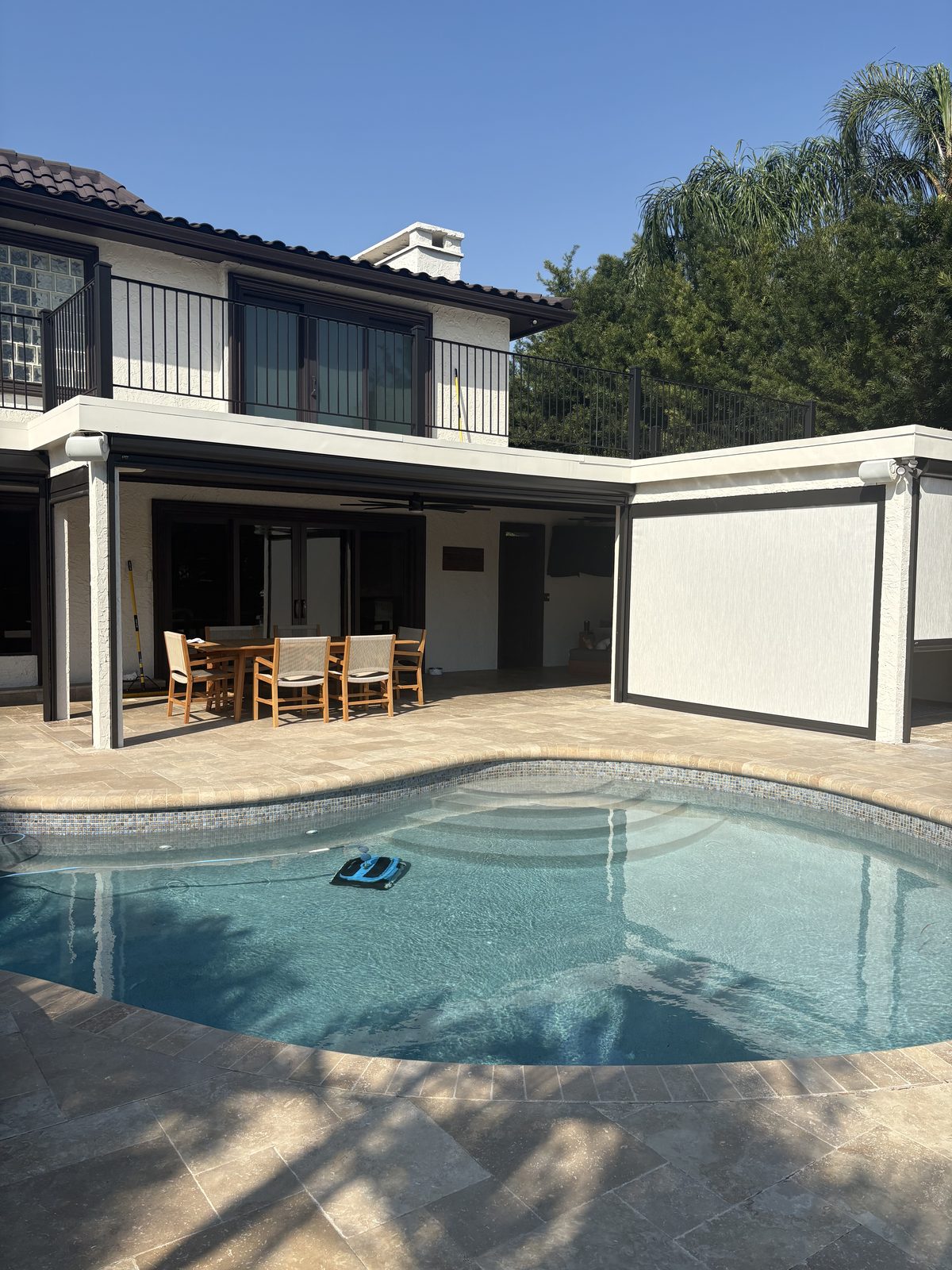
A good pool and lanai audio walkthrough designs around your property, listening areas, wiring paths, weather exposure, and daily use.
By LogiBuilt · September 29, 2026 · 6 min read
Pool and lanai audio in Tampa is not something we like to design from a photo. The best systems start with the actual space, the way your family uses it, and the small details that only show up in person. A screened lanai, a pool cage, a covered patio, and an open yard all behave differently. If an installer walks in with a speaker package already decided, they are skipping the part that protects the result.
We look at pool audio as a property design, not a product decision. Florida weather is part of that design, especially heat, humidity, salt air near the coast, and afternoon storms that blow rain sideways. The goal is not simply to make the area loud. The goal is to make music feel even, easy to control, and appropriate for the spaces where people actually sit, cook, swim, and talk.
A serious walkthrough begins with questions before equipment. We want to know how you listen, who uses the space, and what already frustrates you. A family that hosts pool days needs a different plan than someone who wants quiet music with morning coffee. Those answers shape the system before speaker locations ever come up.
We also ask where people gather during real use. In Tampa homes, the main listening area is often not the entire backyard. It may be the dining table under the lanai, the outdoor kitchen, the spa, or the shallow end where kids spend the most time. If those spots are not identified, the system can end up loud in the wrong place.
This is also where we talk about expectations for control. Some homeowners want one simple outdoor music area, while others want the lanai and pool deck to behave separately. Some want background audio that never interrupts conversation, while others want more energy when guests are over. A good walkthrough turns those preferences into a design, not a guess.
The installer should physically walk the lanai, pool edge, seating areas, and equipment side of the house. We are looking for coverage, weather exposure, access, and the places where sound will be useful. A quick glance at the covered wall is not enough. Outdoor audio depends on every listening area, not just the most convenient mounting surface.
Screened lanais create their own decisions. Pool cages limit some routes, affect where equipment can be placed, and change how the space feels when people are inside it. Covered ceilings, columns, beams, and masonry all matter because they affect installation access. A proper walkthrough notes structural details before any recommendation is made.
We also pay attention to the orientation of the home and openings. Sliders, windows, and seating direction tell us where people naturally face and how the lanai connects to the interior. Afternoon sun and storm direction matter because outdoor gear should not be placed as if every day is calm and dry. In Florida, the weather pattern is part of the floor plan.
Outdoor audio is often won or lost before the speakers go in. Wire paths, equipment location, and access can change the best design. We look for existing wiring, attic or soffit access, wall construction, and where the audio equipment can live safely. These checks help avoid a system that looks simple on paper but becomes awkward in the home.
Equipment location deserves real attention in a Tampa home. Garages can get hot, lanais can be humid, and outdoor areas can see blowing rain during summer storms. The right location depends on the house, the access, and how the homeowner wants to use the system. We would rather solve that during the walkthrough than work around it later.
Network setup is part of the conversation because many homeowners control audio from phones or tablets. If the lanai has weak connectivity, the system may feel frustrating even when the speakers are placed well. A proper AV walkthrough includes evaluating that setup instead of assuming it is fine. The easiest system to live with is the one designed around both sound and control.
Zones should be discussed before anyone counts speakers. The question is not only where music should play, but where it should play independently. Your covered lanai, pool area, outdoor kitchen, and side yard may not all need the same volume or source at the same time. If zones are ignored, the system can feel either too loud or not flexible enough.
We take a clear position on this. Trying to cover a pool and lanai with one loud speaker is usually the wrong approach. It may seem simpler, but it often creates hot spots near the speaker and weak spots where people actually sit. Outdoor audio should feel distributed, not forced.
Separate zones also help with daily life. You may want music near the grill without filling the pool deck. You may want the lanai active during dinner and the rest of the yard quiet. A walkthrough should sort those patterns out before equipment is selected.
A good installer should be able to explain why one plan fits your property better than another. More equipment is not automatically better, and fewer pieces are not automatically cleaner. The right answer depends on listening areas, wiring difficulty, weather exposure, control needs, and equipment location. If the explanation sounds like a package instead of a design, ask more questions.
There are real tradeoffs with every outdoor audio project. Hidden wiring may require more careful access planning than a more direct route. Wider coverage may require more thoughtful zoning than a single general area. A clean install should respect the home as much as the sound.
We also believe the walkthrough should leave you more informed. You should understand what the installer saw, what conditions matter, and why the recommendation fits your lanai and pool. That does not require a long technical lecture. It requires clear judgment, local experience, and a willingness to design around the actual property.
If you are comparing options for pool and lanai audio, we are happy to look at the space with you. LogiBuilt offers a free in-person walkthrough for Tampa Bay homeowners. We will check the listening areas, wiring paths, equipment location, network setup, and weather exposure. Our work is warrantied for one year.
Photos can help with an early conversation, but they do not replace an in-person walkthrough. The installer still needs to see listening areas, wiring access, equipment location, weather exposure, and how the lanai is actually used.
Sometimes, yes. If people use the covered lanai, pool, spa, or outdoor kitchen differently, separate zones can make the system easier to live with. The walkthrough should identify those areas before speakers are recommended.
Heat, humidity, salt air, sandy soil, pool cages, and afternoon storms all affect planning. A good design accounts for weather exposure, wire paths, equipment location, and the way people gather outside.
Expect questions about how you listen, what frustrates you, and how many people use the space. The installer should also review existing wiring, network setup, structural details, listening areas, and possible zones.
Try our free lighting visualizer, see your home transformed in about a minute. No upload needed.
Free consultation, honest quote. Most estimates come back within one business day.
or call (813) 696-3168