
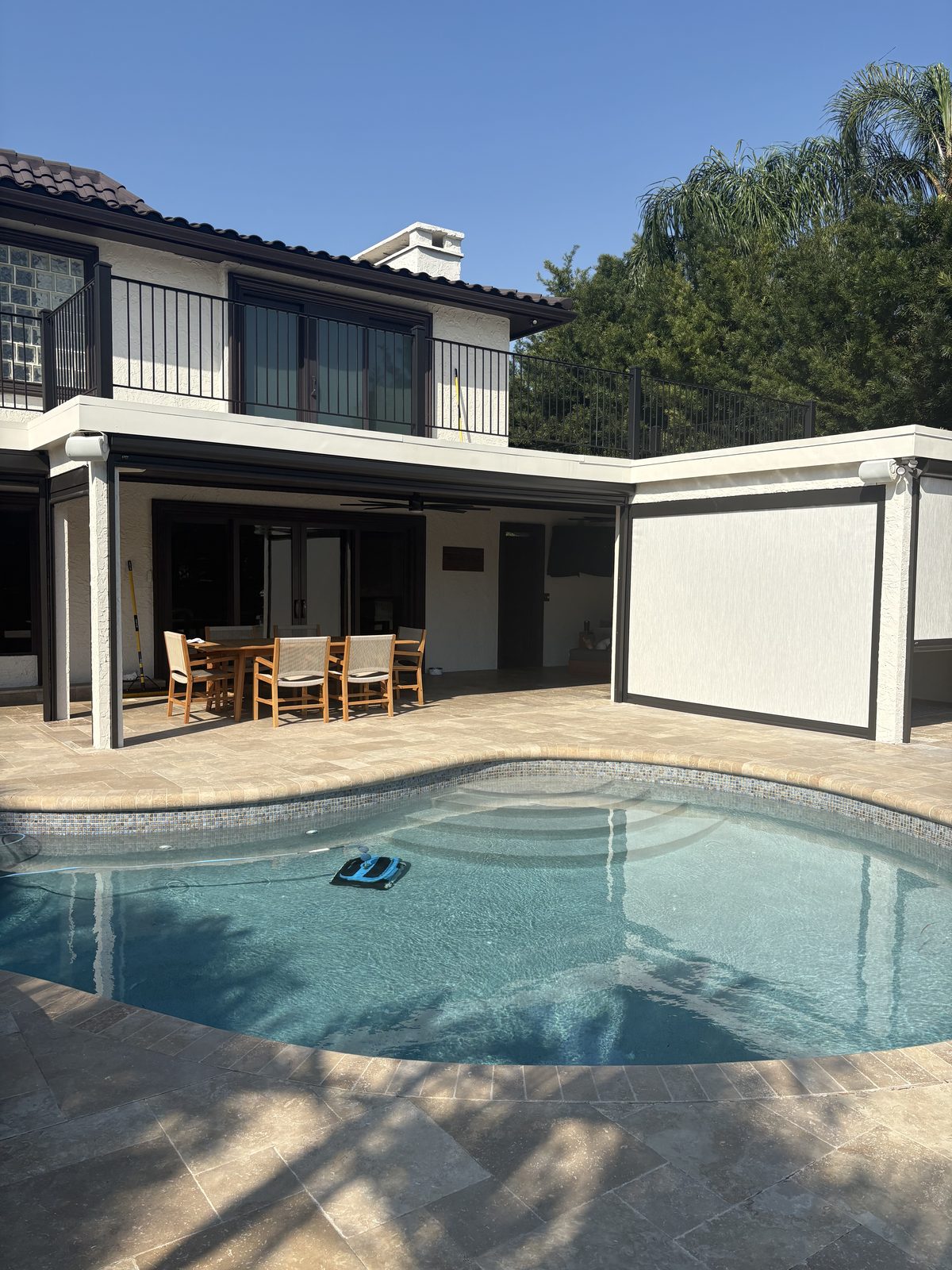
A practical Tampa installer view on choosing patio speakers or distributed landscape audio for a pool, lanai, and backyard.
By LogiBuilt · September 1, 2026 · 8 min read
For a Tampa pool and lanai, the real question is not whether outdoor speakers can play loud enough. Most systems can get loud enough to be noticed. The better question is whether the sound stays comfortable where people actually sit, swim, grill, and talk. That is where the choice between a few patio speakers and a distributed landscape audio system starts to matter.
We see this decision on homes with screened lanais, pool cages, open patios, palm beds, oak shade, and neighbors closer than the photos make it look. Florida weather also changes the answer, because heat, humidity, rain, and salt air are not side notes here. Long pool days turn into evenings outside, so the system has to sound good at different volumes and different times of day. Good outdoor A/V planning is less about showing off equipment and more about controlling coverage.
Patio speakers can be the right answer when the main listening area is close to the house. If your lanai dining table, outdoor kitchen, and seating are all under the covered area, a focused patio setup can feel clean and simple. The speakers can be aimed toward the people using the space, which is always better than aiming sound toward open yard or property lines. This approach can work especially well when the pool is more visual backdrop than primary listening zone.
The tradeoff is that patio speakers usually start from one edge of the space. Sound leaves the house and has to travel across the pool deck, over water, and through open air. By the time it reaches lounge chairs at the far side, the covered lanai may already feel louder than anyone wants. That is the pattern that leads people to keep turning volume up, then back down, then up again.
On a walkthrough, we look at where people spend time, not just where speakers are easy to attach. We check the lanai ceiling or wall surfaces, the direction sound would fire, and whether the pool cage changes the feel of the space. We also look at nearby homes, fences, side yards, and open water views where sound can carry. A patio speaker plan should make the best seat sound good without making the closest seat take the hit.
A distributed landscape audio system spreads sound through more locations around the pool and yard. Instead of asking a couple of speakers near the house to cover everything, smaller listening areas are created closer to where people gather. For many Florida pool and lanai layouts, four to six speakers often provide more balanced coverage than only two speakers. The goal is even sound at comfortable levels, not more sound for its own sake.
This matters when the pool is used from several zones. One group may be under the lanai, another may be on chaise lounges, and someone else may be near the spa or grill. When sound is distributed, each area can feel included without one location being overpowered. That is usually better for conversation, better for evening listening, and better for keeping peace with neighbors.
The planning is more involved because the yard becomes part of the system. We look at planting beds, palms, walkways, pool equipment locations, irrigation, drainage patterns, and where future landscaping may grow. We also look at how to aim speakers inward, because outdoor speakers should serve the listening area rather than the property line. If the backyard has room to breathe, distributed audio often feels more natural than sound launched from the back wall of the house.
Tampa outdoor audio lives in a tough environment. Heat, humidity, direct sun, afternoon rain, and salty coastal air near the bay or beaches all affect equipment and hardware. Even quality outdoor speakers can fail early if the equipment or installation hardware is not suited to the environment. That is why we treat placement and mounting as part of performance, not just appearance.
A covered lanai gives some protection, but it does not make outdoor equipment indoor equipment. Humidity moves through the space, wind pushes rain sideways, and summer heat builds under rooflines. Pool chemicals, sprinklers, and salty air can all add wear over time. We want the installation to acknowledge those realities from the start, because Florida will test shortcuts quickly.
Landscape audio brings its own weather questions. Speakers may sit closer to planting beds, mulch, sandy soil, irrigation overspray, and areas that get soaked during storms. We pay attention to low spots where water collects and to places where maintenance crews may work around the equipment. A system that looks fine on day one still has to survive hurricane season, yard work, and the daily cycle of sun and moisture.
We do not start by counting speakers from a brochure. We start by walking the property the way the homeowner actually uses it. We ask where people sit in the morning, where they gather during football or parties, and where music is only background. The answer usually becomes clear when we stand in the yard and listen to the space.
We also pay close attention to direction. Speakers should be aimed toward the pool deck, lanai seating, or landscape zone where people are listening. They should not be aimed at neighboring homes, open side yards, or spaces where sound travels without helping anyone enjoy the system. That single choice often separates a pleasant outdoor system from one that feels louder than it needs to be.
Access matters too, because a clean plan has to be buildable. We look at wire paths, equipment locations, attic or soffit access where relevant, landscape beds, paver edges, and how the system will be serviced later. Surface difficulty, distance, zones, and equipment placement all affect the scope more honestly than a one size answer. The best design is the one that sounds right and can be installed cleanly on the actual property.
Most homeowners do not want to blast the neighborhood. They want music to feel full at the pool without making one area too loud. When the system is under designed for the space, volume becomes the only tool. Better coverage gives you another option, which is keeping the level comfortable because sound is already where it needs to be.
This is why two speakers are not always simpler in real life. They may be simpler to picture, but they can force a compromise between the lanai and the far side of the pool. Four to six speakers, when placed and aimed properly, often let the system work less aggressively. That is usually the more neighbor friendly approach for a typical Florida pool and lanai.
We also think about evening use, because sound behaves differently when the yard gets quiet. During the day, pool noise, conversation, wind, and activity cover a lot. At night, the same volume can feel much more present beyond the property. A good layout gives you useful sound at lower levels, which is exactly what most Tampa homeowners want after sunset.
If your outdoor living happens mostly under the lanai, we would not overcomplicate the answer. A few well placed patio speakers may give you exactly what you need. They should be selected and installed for outdoor conditions, and they should be aimed into the seating area. In that layout, clean placement matters more than adding equipment just because there is a pool nearby.
If the pool deck is the main hangout, distributed landscape audio is usually the better conversation. It lets the system follow the way people move through the backyard. It also avoids making the covered lanai the loudest point just to reach chairs across the water. For many Tampa homes, that produces a more relaxed and useful outdoor audio experience.
The right answer may also be a combination. A lanai zone can serve dining and covered seating while landscape speakers fill the pool edge or yard. Separate areas can make the system easier to live with because not every gathering uses the whole backyard the same way. We like designs that match real habits, because those are the systems homeowners keep using.
If you are deciding between patio speakers and distributed landscape audio, we are happy to look at the space with you. LogiBuilt offers a free in-person walkthrough. We will talk through coverage, weather exposure, and placement. You will get a practical recommendation for your Tampa pool and lanai.
Sometimes, but usually only when the main listening area is close to the covered lanai. For many Florida pool and lanai layouts, four to six speakers often create more balanced coverage than only two.
It can be more neighbor friendly when designed correctly. The key is aiming speakers toward the listening areas, not toward property lines, neighboring homes, or open spaces.
Heat, humidity, rain, direct sun, and salty coastal air all matter. Equipment and installation hardware need to be suited to outdoor conditions, and placement should reduce unnecessary exposure where possible.
The main factors are speaker count, wire paths, equipment location, number of listening zones, surface access, landscape conditions, and how evenly the pool and lanai need to be covered.
Try our free lighting visualizer, see your home transformed in about a minute. No upload needed.
Free consultation, honest quote. Most estimates come back within one business day.
or call (813) 696-3168